
July 2, 2026
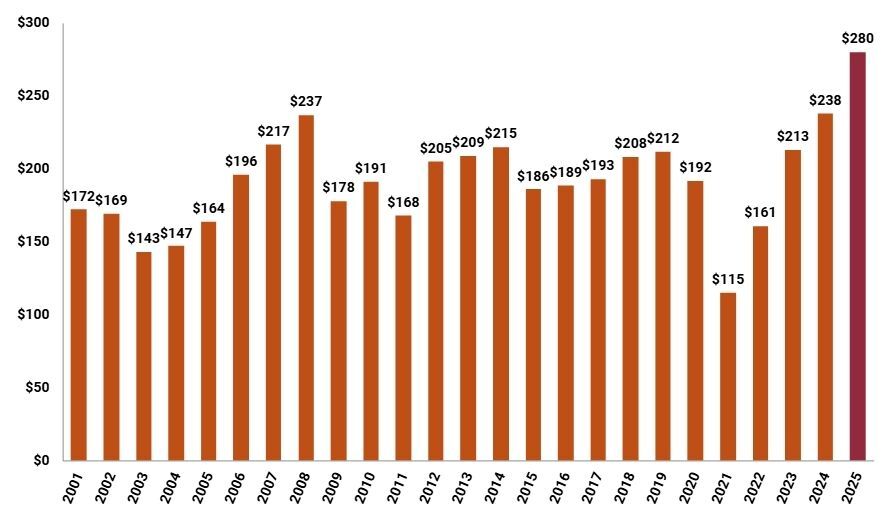
Breakthrough T1D’s spending reached a record high in the last fiscal year (July 1, 2024 – June 30, 2025). This is the highest expense level since 2001, the earliest year for which JDCA has data. This elevated level of spending corresponds to a similarly high FY25 total revenue.
This report provides an in-depth look into key spending areas. These areas show where Breakthrough T1D chose to spend its money, almost all from your donations, pinpointing what areas received priority funding and which areas did not. The principal areas we examine in this report include research grant spending, payroll, rent, promotions, printing, meetings, and professional services.
All data is based on the latest consolidated financial statements for fiscal year 2025 (FY25).
A Massive Spending Year
Higher spending can be a good thing if it drives tangible results. It is not good if the money spent has no impact. For most donors, their number one priority, by far, is to invest much more in cure research. Presumably, they would like to see research grants rise while most other categories remain flat. While research grants did rise sharply in FY25, so did payroll (employee salaries) and all other spending categories except rent—some genuinely good moves and some clear watch-outs.
Chart A: Breakthrough T1D Total Expenses, 2001-2025 ($ Millions)
Expense Categories: Research Grants and Payroll Grew the Most
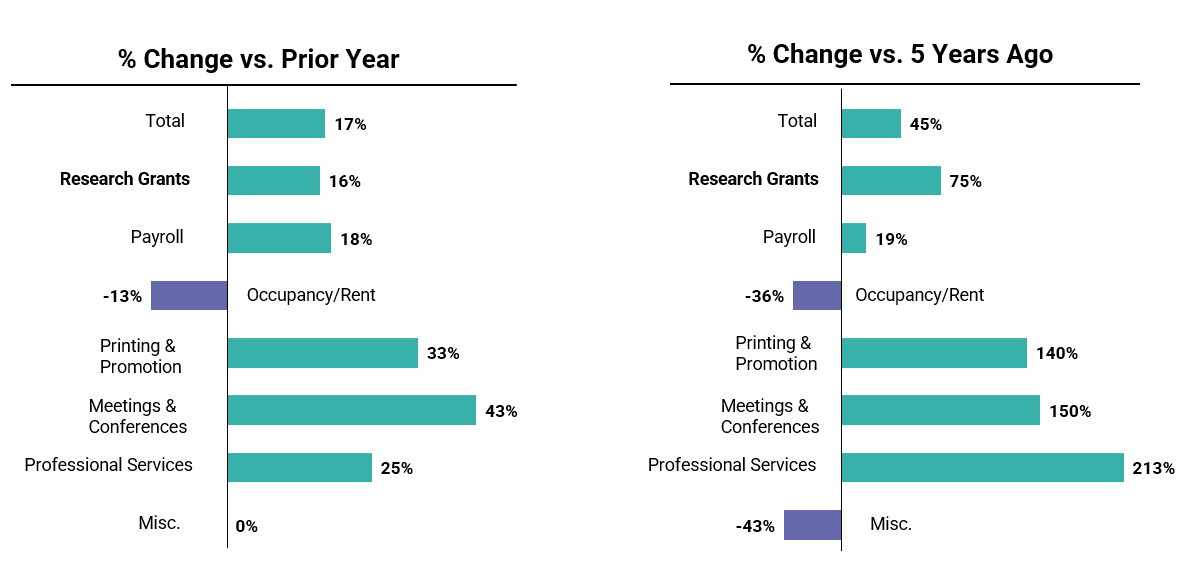
The rise in research grants is fundamentally a move in the right direction, while such a sharp rise in payroll is concerning. Payroll rose from $79 million in FY24 to $93 million in FY25, adding $14 million in additional personnel, salary raises, and bonus costs. This is a massive gain. During that same period, inflation rose only 2.7%, which would have added only about $2 million from the prior year. This means that Breakthrough T1D added about $12 million extra in personnel costs—a whopping increase and one that, for many large bureaucratic organizations, can get out of control quickly, with little to show for it. We are surprised by this gain, given how effectively Breakthrough T1D was able to trim costs and improve efficiency during COVID, gains that are now long gone. This trend can’t continue, and most donors would rather see the money go toward cure progress than employees’ pockets.
Other secondary expense categories experienced relatively small monetary changes but large percentage changes (see chart B). Printing and promotions grew from $9 million to $12 million; meetings and conferences from $7 million to $10 million; and professional services from $20 million to $25 million. Occupancy, the costs associated with renting buildings and office space, continues to shrink. It fell from $16 million in FY24 to $14 million in FY25 and is $8 million less than five years ago.
Chart B: Expense Categories vs Prior Years
Research Grants: Solid Growth but Still Only 40%
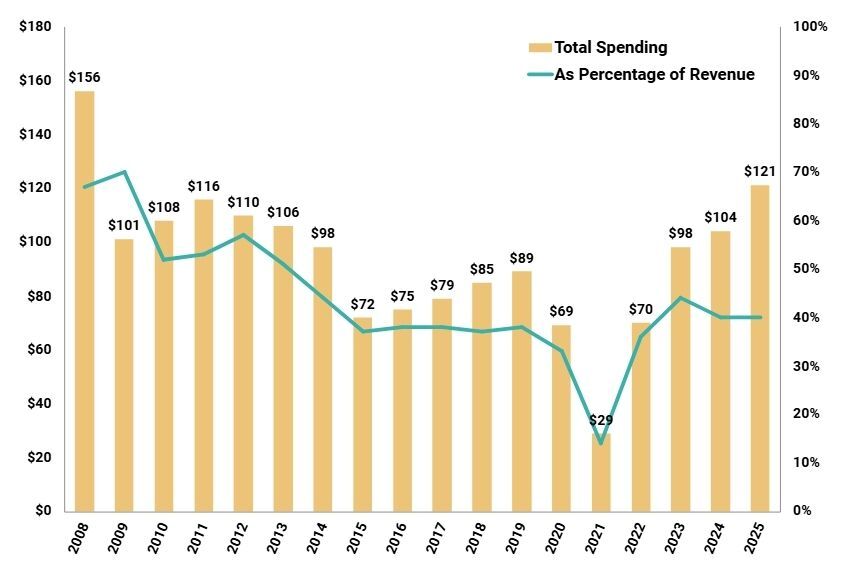
Overall, this is a good move and in the right direction, but it is still not enough. Although total research grant spending rose from FY24, as a percentage of total revenue, this category remains unchanged from the prior year at 40% (see chart C). By comparison, in every year until 2013, research grants accounted for more than 50% of revenue—or more than half of every dollar given. Since then, research grants have yet to cross back over that key metric.
Note that this number does not include internal costs associated with distributing grants or research investments made by the T1D Fund, an independent subsidiary of Breakthrough T1D.
JDCA queried Breakthrough T1D representatives to see whether the organization intended to continue increasing research grant spending in subsequent years: “Presently, our long-range planning has us maintaining the current level of research spending through FY29, when we plan to again materially increase our allocation to research grants.”
Chart C: Research Grant Trends, 2008-2025
JDCA’s prior report on Breakthrough T1D’s revenue revealed that the substantial boost was primarily attributed to large, transformational gifts to Project ACT (Accelerate Cell Therapies). This creates high expectations among donors that increases in research grants will be used to fund projects aimed at a cure, and nothing else. Time will tell.
