
At a Glance
- JDCA surveyed T1D donors for their opinions and priorities regarding nonprofit organizations and, newly, for-profit companies.
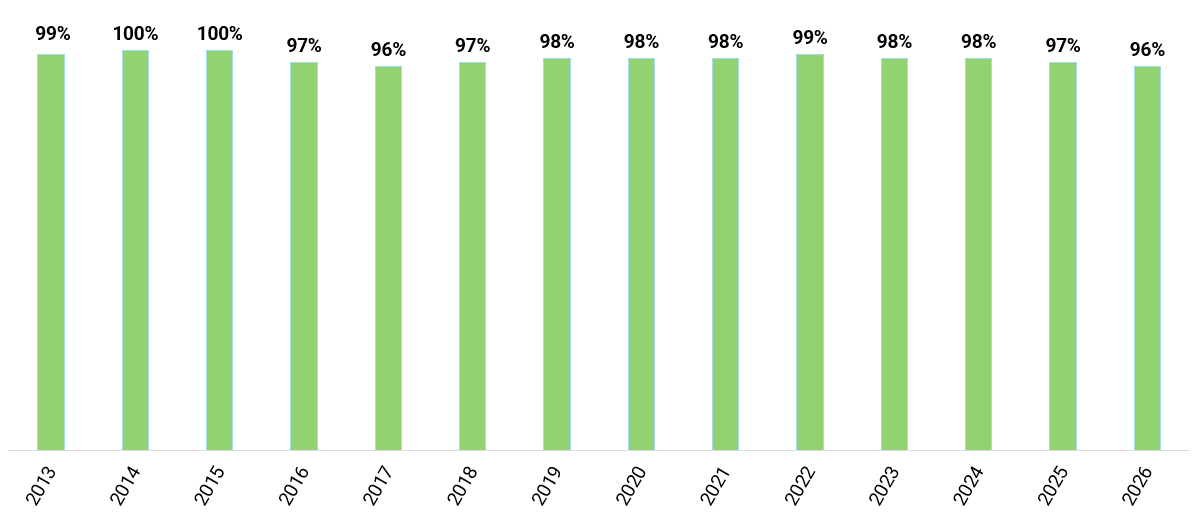
- Finding a cure for T1D remains the number one priority among donors. 96% say it should be the top priority for nonprofits.
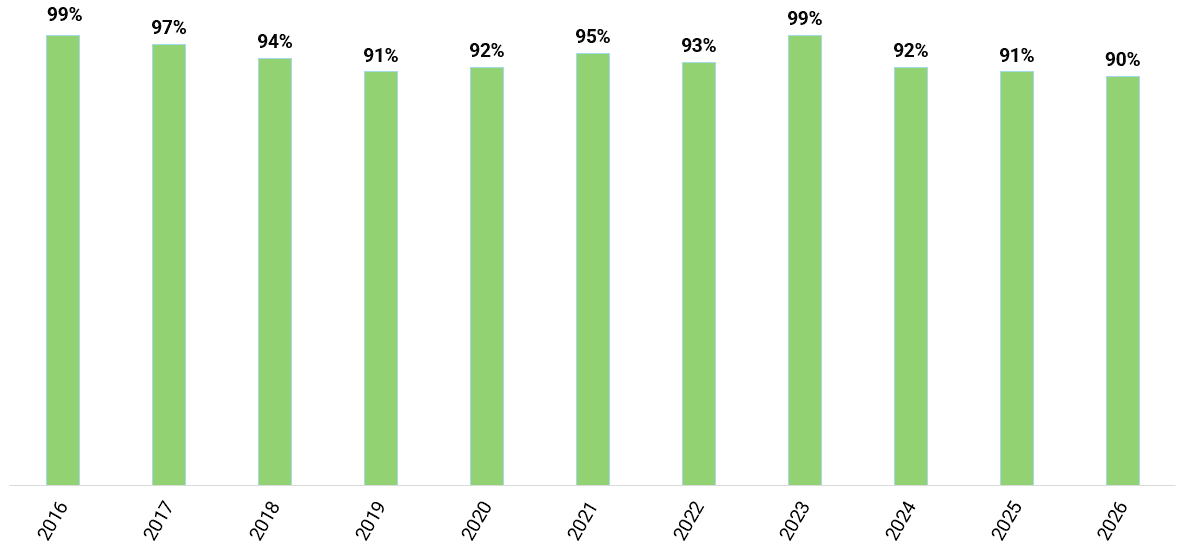
- Donors want a Practical Cure. 90% say they would give to Practical Cure research if the option were easily available.
- If nonprofits increase their cure research funding, donors will give more. 80% of ADA donors say they would give more; 66% of Breakthrough T1D donors say the same.
- For-profit companies are perceived as increasingly important in delivering a cure. 91% say for-profits are important; 54% say that for-profits will have more impact on cure progress than nonprofit grants or academic research.
March 5, 2026
Results are in for JDCA’s 15th annual T1D Community Donor Sentiment survey. The survey is designed to determine the values, opinions, and priorities of donors in the T1D community who are directly affected by the disease. This includes those living with T1D today, as well as their friends, family, and caregivers.
Survey responses are vital in representing the current voice of the T1D donor. Insights gathered convey what motivates people to give to nonprofits working for T1D. As in prior years, findings reveal that the community continues to uphold cure research as the top priority when donating. The results also show that a Practical Cure outcome is highly valued and that nonprofits have a win-win opportunity to further align with donor priorities.
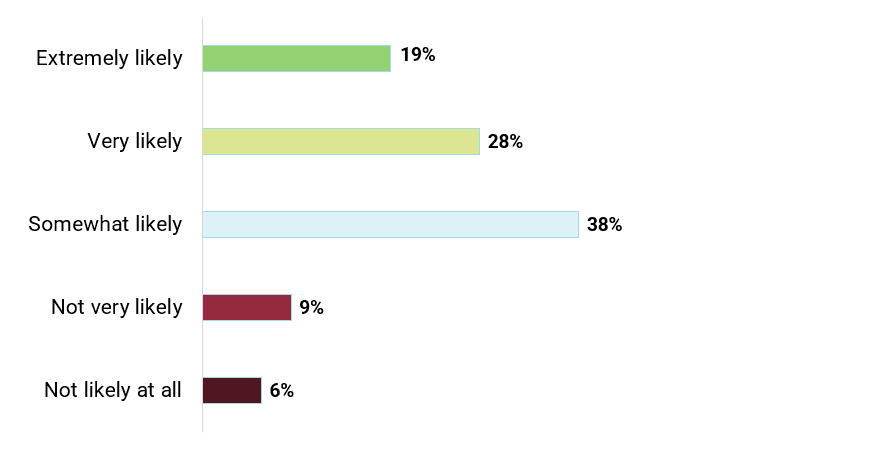
For the first time, the survey included questions regarding for-profit companies. As the amount of T1D research undertaken by for-profit companies has increased in the past several years, we wanted to know what T1D donors think about this change. The survey highlighted optimism about this evolution, with 9 out of 10 respondents saying it is an important development in our progress toward a cure, and just over half believe that for-profit companies will have a greater impact on achieving a cure than nonprofits or academic centers. However, actual intent to invest in these companies is lukewarm, with only half of the respondents saying they are extremely/very likely to invest in a for-profit company working on T1D.
Key Takeaways:
By a Landslide, Finding a T1D Cure Is the #1 Reason People Give
JDCA asked T1D donors two key questions regarding their priorities when giving. The first asked them to select their top motivation among ten possible answers. The second asked if they believed cure research should be the top priority for diabetes charities.
- 80% chose cure research as the main reason they gave to diabetes-focused charities (see chart A).
- 96% say cure research should be the top priority for diabetes-focused charities, continuing the historical trend (see chart B).
Chart A: What is the main reason you give to diabetes-focused charities or participate in events? (Choose one)
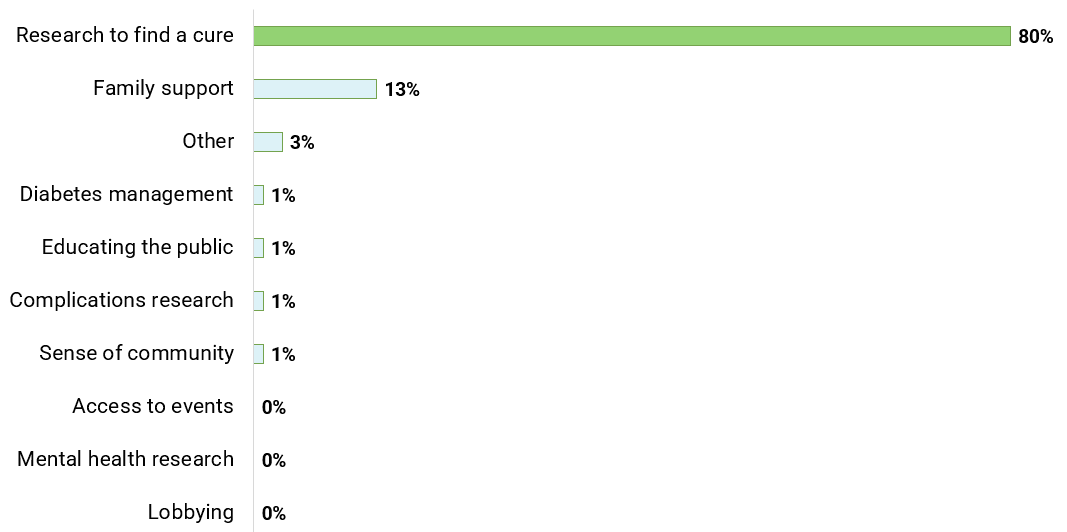
Chart B: Do you believe funding cure research should be the top priority for diabetes charities? (% Yes)
Donors Want a Practical Cure
Donors also shared their opinions on the importance and value of a Practical Cure (a.k.a. Functional Cure). Survey takers were asked how much they thought this outcome would improve the quality of life for people living with T1D and whether they would donate to Practical Cure research initiatives.
- 96% say a Practical Cure would improve the quality of life.
- 90% say they would give to a Practical Cure initiative if the option were made easily available (see chart C).
Chart C: Would you donate to a Practical Cure if that option were made easily available to you? (% Yes)
Donors Give More When Nonprofits Increase Cure Research
Survey takers were asked for their opinion on two of the largest and most influential diabetes-focused nonprofits: Breakthrough T1D and the American Diabetes Association (ADA).
They were presented with information about each organization’s T1D research spending from the most recent fiscal year for which public data was available (FY24).* Respondents were reminded that Breakthrough T1D allocated only 40% of its total annual revenue to T1D research grants, while the ADA allocated <2% of its revenue to T1D research grants. They were then asked questions about how this information might influence future donation decisions.
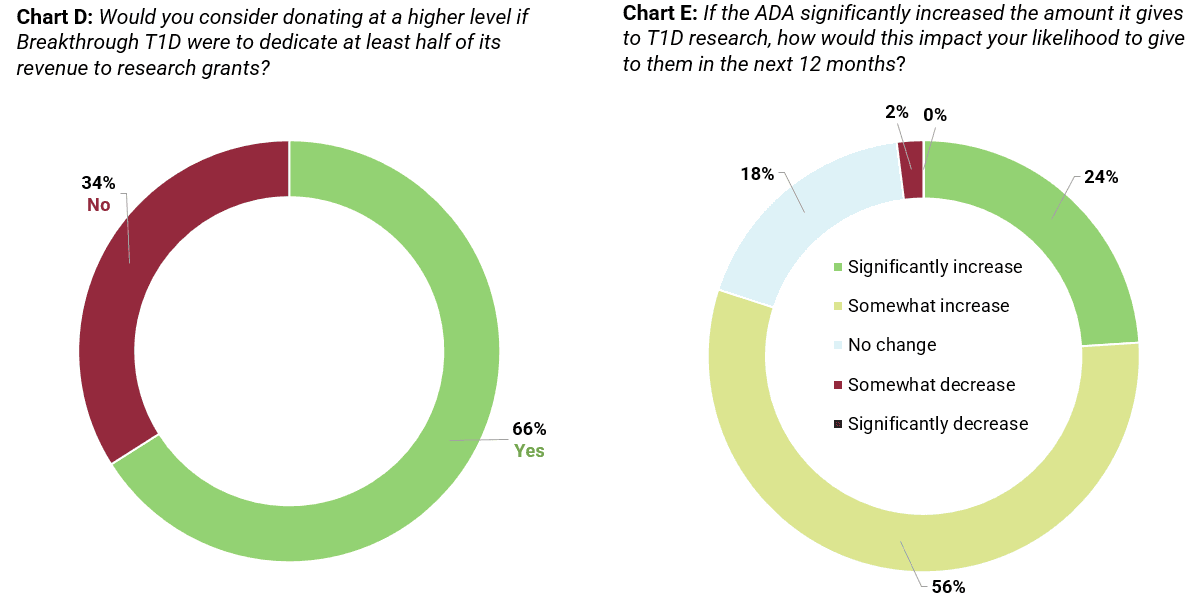
Responses are clear: An increase in T1D research grants would attract more donations—a win-win. Both Breakthrough T1D and ADA donors stated that they would give more if their respective nonprofit materially increased the amount they gave to cure research grants (see charts D and E).
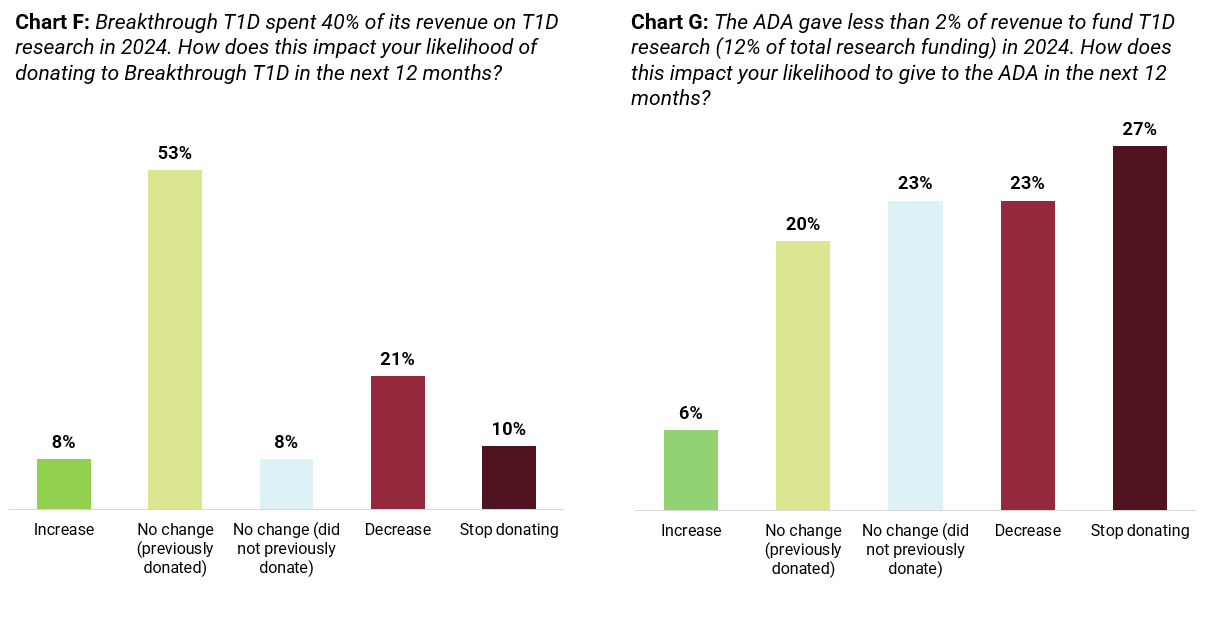
In addition, a significant number of donors say they would decrease or stop donating if the grant levels remain as they were in fiscal year 2024. 50% of ADA donors said they would decrease or stop donating, while 31% Breakthrough T1D donors said the same. This flags a key risk for nonprofits that can be easily fixed.
If the current level of funding persists, some donors will stop contributing altogether. However, if both organizations increased T1D research funding, they would see revitalized support (see charts F and G).
*Breakthrough T1D’s fiscal year operates from July 1, 2023, to June 30, 2024.
*ADA’s fiscal year operates from January 1, 2024, to December 31, 2024.
Donors Believe For-Profit Companies Are Increasingly Important for Delivering a Cure
Over the past five years, there has been a material shift in the amount of T1D research led by for-profit companies. Early-stage cure research, once led by nonprofit and academic support, is starting to transition to biotech companies.
As a result, and for the first time, the survey included questions to gather donor opinions about this emerging shift in research to for-profit enterprise. JDCA first asked donors about the importance level they place on for-profits in the development of a cure, and how it compares to nonprofit and academic support. Lastly, respondents were asked about their likelihood of investing in a company conducting clinical-stage Practical Cure research.
- 91% believe that for-profits will be important in the development of a Practical Cure (see chart H).
- 54% believe that for-profits will have more impact on cure progress than nonprofit grants (27%) or academic research (19%).
- 47% say they are very likely or extremely likely to invest in a company working toward a potential Practical Cure (see chart I).
Chart H: How important do you believe for-profit companies will be in the development of a T1D Practical Cure?
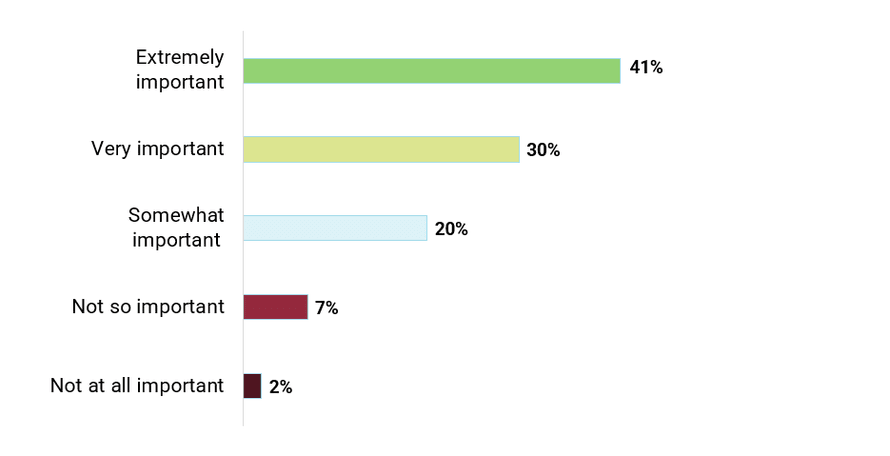
Chart I: How likely are you to invest in a for-profit conducting clinical-stage research that could be a potential Practical Cure?